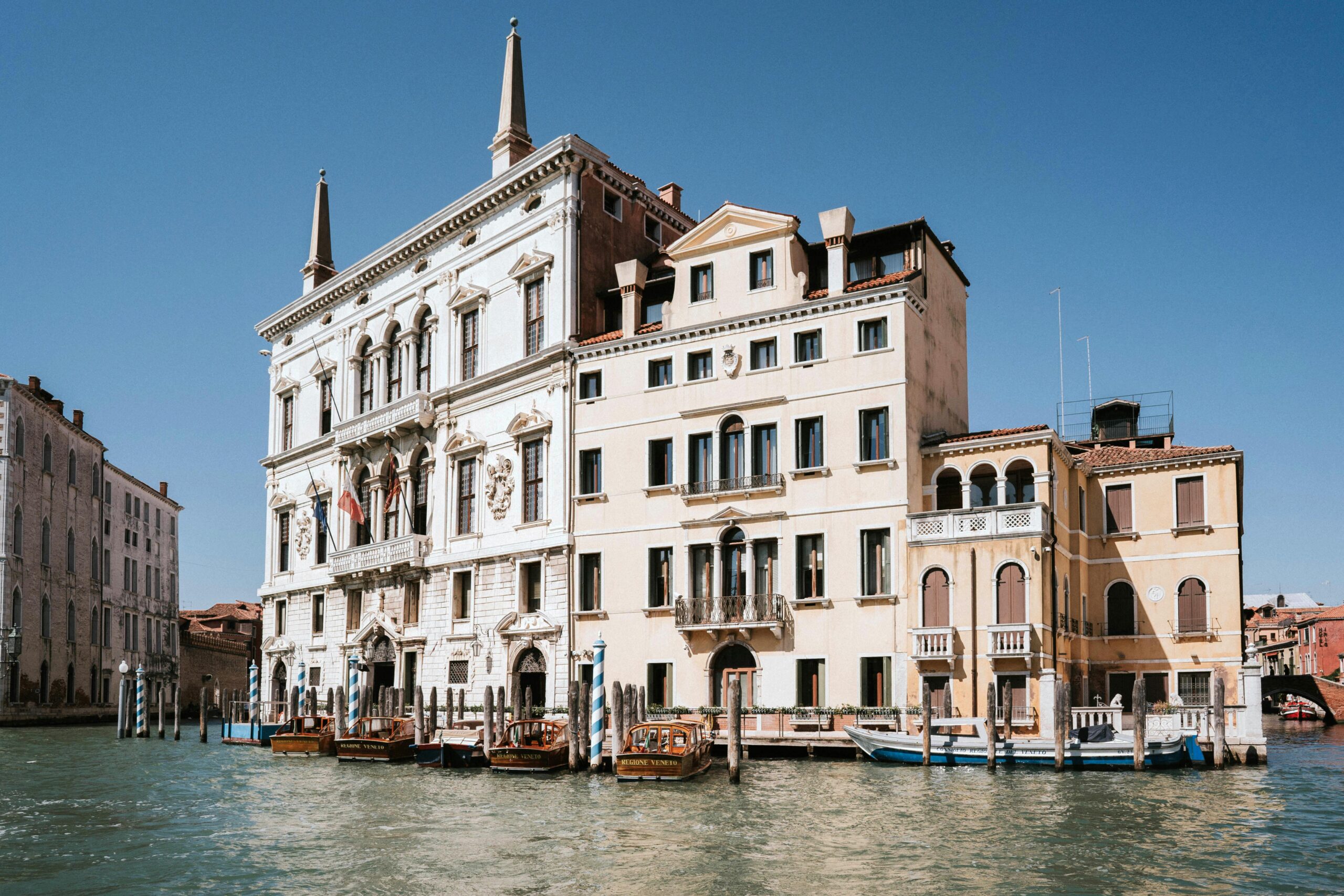
When it comes to Italian cities, ‘unique’ is a recurrent theme. After all, there are not many Colosseums, Brunelleschi domes and Mole Antonellianas out there. That being said, there is one city that is profoundly different from anything else Italy, and really the rest of Europe, has to offer. The city of Venice is a floating miracle, an open-air museum, and an absolute joy for the eye. Even just one visit will have you thinking about what it would be like to buy a house in Venice.
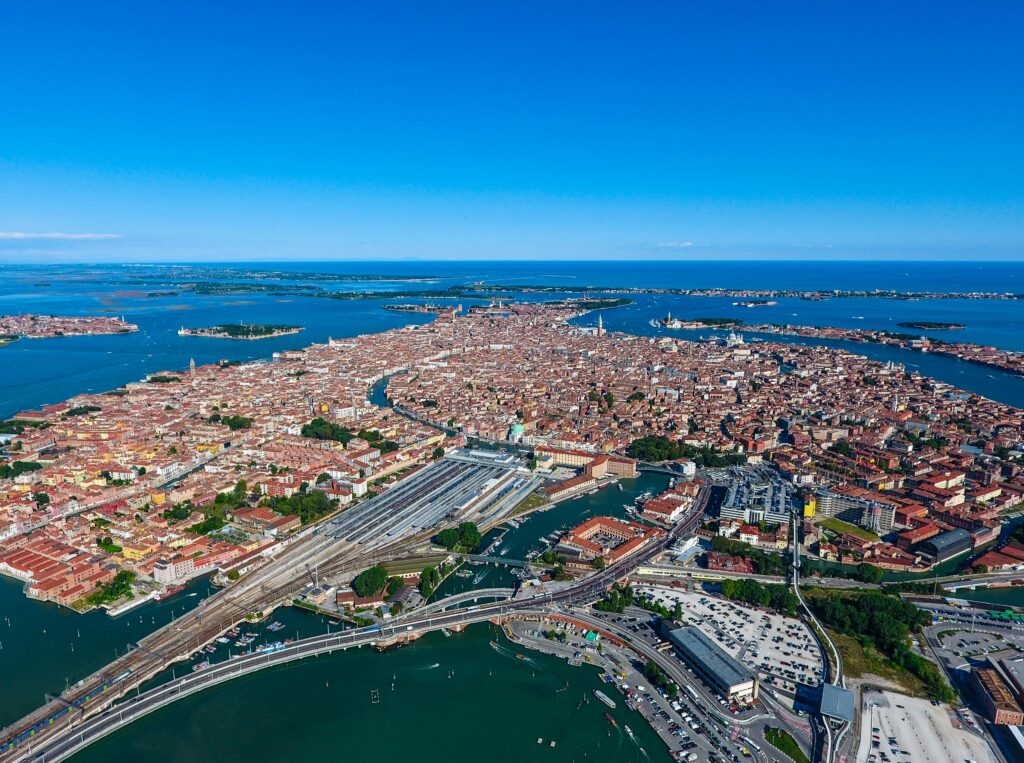
The city of Venice is comprised of over 100 islands spread over 200 square miles of Venetian Lagoon, as well as a populous inland urban area, the boroughs of Mestre and Marghera. To help you better understand how to approach buying property in Venice, we’ve put together a comprehensive guide. This guide covers everything from neighborhood prices and the buying process to taxes, renovation rules, and what life in Venice is really like.
Can Foreigners Buy Property in Venice?
Italy operates on a “reciprocity principle” for non-EU buyers — meaning your home country must allow Italian citizens to purchase property under similar terms. Citizens of the US, UK, and Australia all qualify. EU citizens have identical property rights to Italian nationals.
All foreign buyers must obtain an Italian tax code (codice fiscale) before completing any purchase. This can be arranged through your notary, a local tax office, or an Italian consulate in your home country.
Best Neighborhoods and Prices
Immobiliare.it indicates that, as of May 2026, the average asking price for residential real estate in Venice ranges from €2,000 per sqm (€190 per sqft) in the Mestre and Marghera area up to €6,000 per sqm (€560 per sqft) in the San Marco and Rialto area. If you are thinking “Wow, not so bad!”, keep in mind that the lower end of that range reflects the inland portion of the city — the historic island center is a different market entirely.
The historic city of Venice is comprised of six neighborhoods called ‘sestieri’: Cannaregio, Castello, Dorsoduro, Santa Croce, San Marco and San Polo.
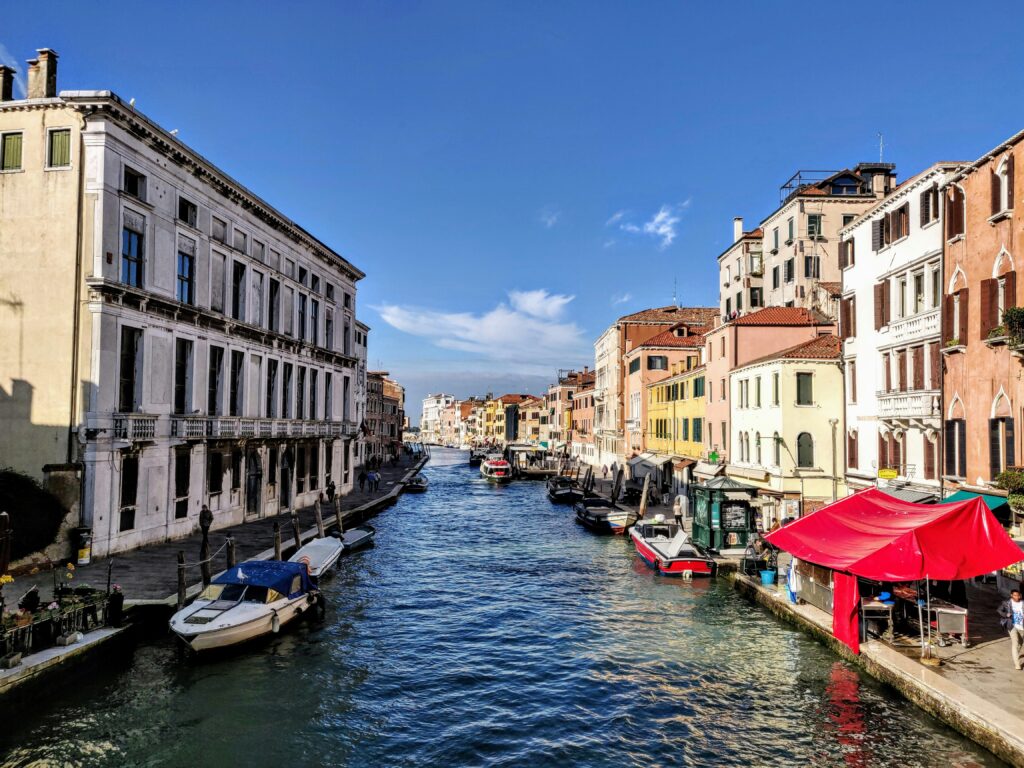
Home prices vary significantly across the sestieri but are generally well above the market and national averages. According to Immobiliare.it data for May 2026, San Marco remains the sestiere where prices are highest, averaging €6,000 per sqm (€570 per sqft). Dorsoduro follows closely at €5,700 per sqm (€500 per sqft), making it more expensive than many buyers expect. Cannaregio averages €5,300 per sqm (€500 per sqft), while San Polo and Santa Croce both come in at €5,000 per sqm (€480 per sqft).
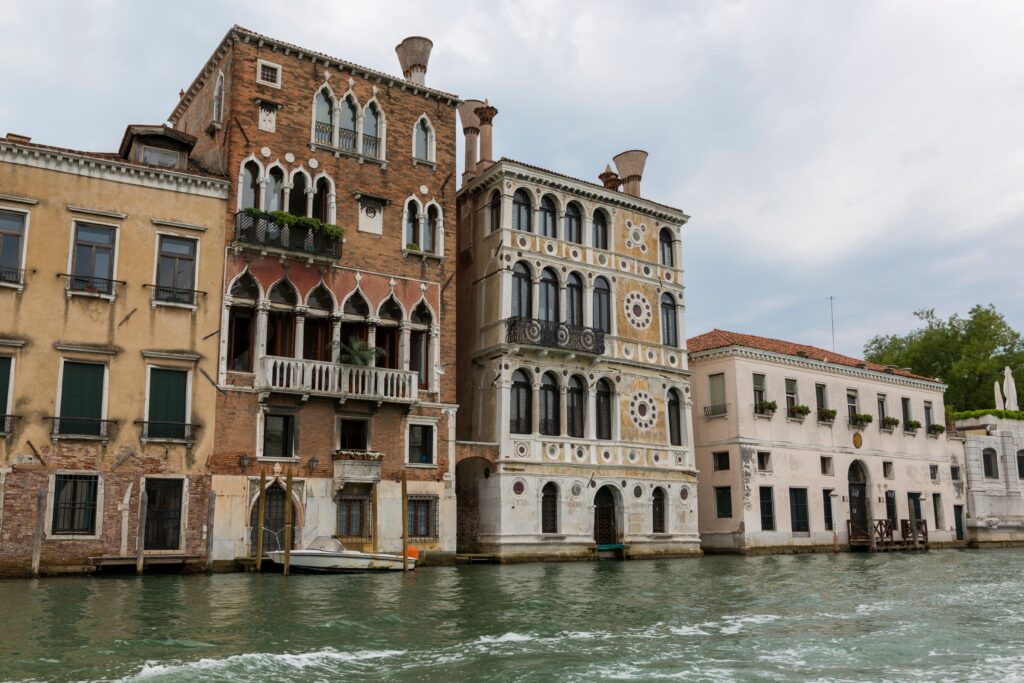
Features that can drive prices significantly up or down are water (or Grand Canal) views, water access, the presence of special architectural or artistic elements, the presence of expansive balconies or roof ‘altane’, and of course property condition. These palazzi and apartments date several hundreds of years, and the internal layout may still reflect the original construction. At the higher end of the market, physical elements have a secondary role in property valuation and assets are priced more similarly to fine art.
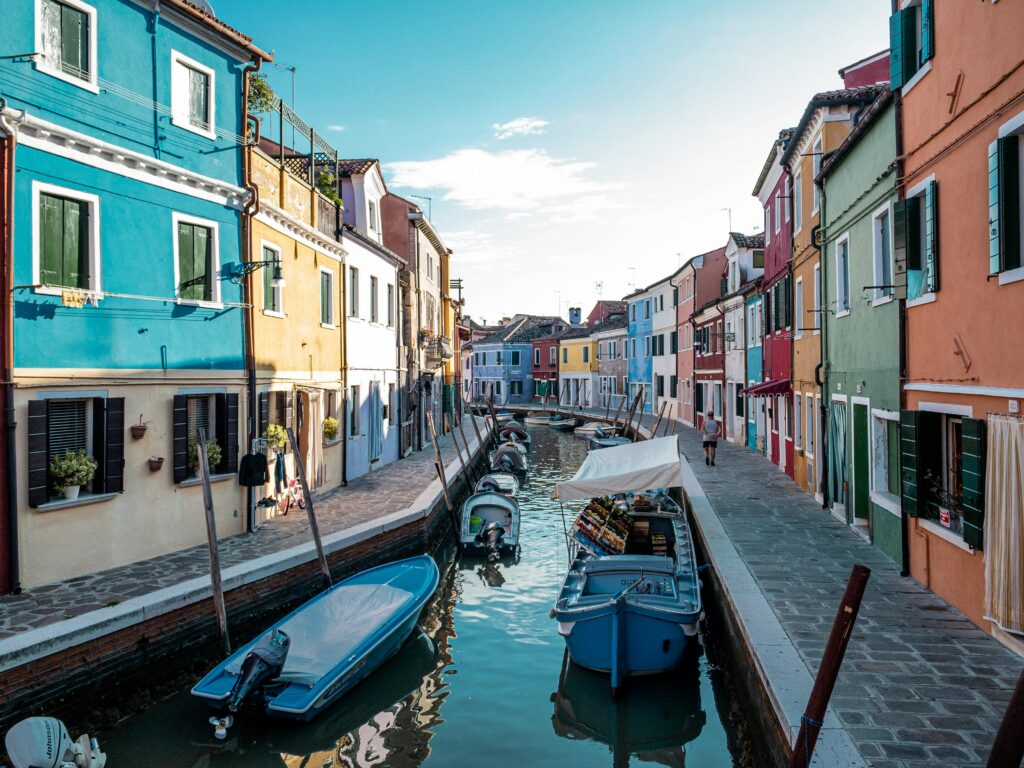
Those who want to experience Venice like a local and hope to avoid tourists may prefer to reside on one of Venice’s islands. The three most famous and populated islands in the Venetian Lagoon are Giudecca, Murano, and Burano. Giudecca is the closest and is considered part of the main city and of Sestiere Dorsoduro. Given its proximity and similarity to the city, prices in Giudecca average €4,800 per sqm (€450 per sqft).
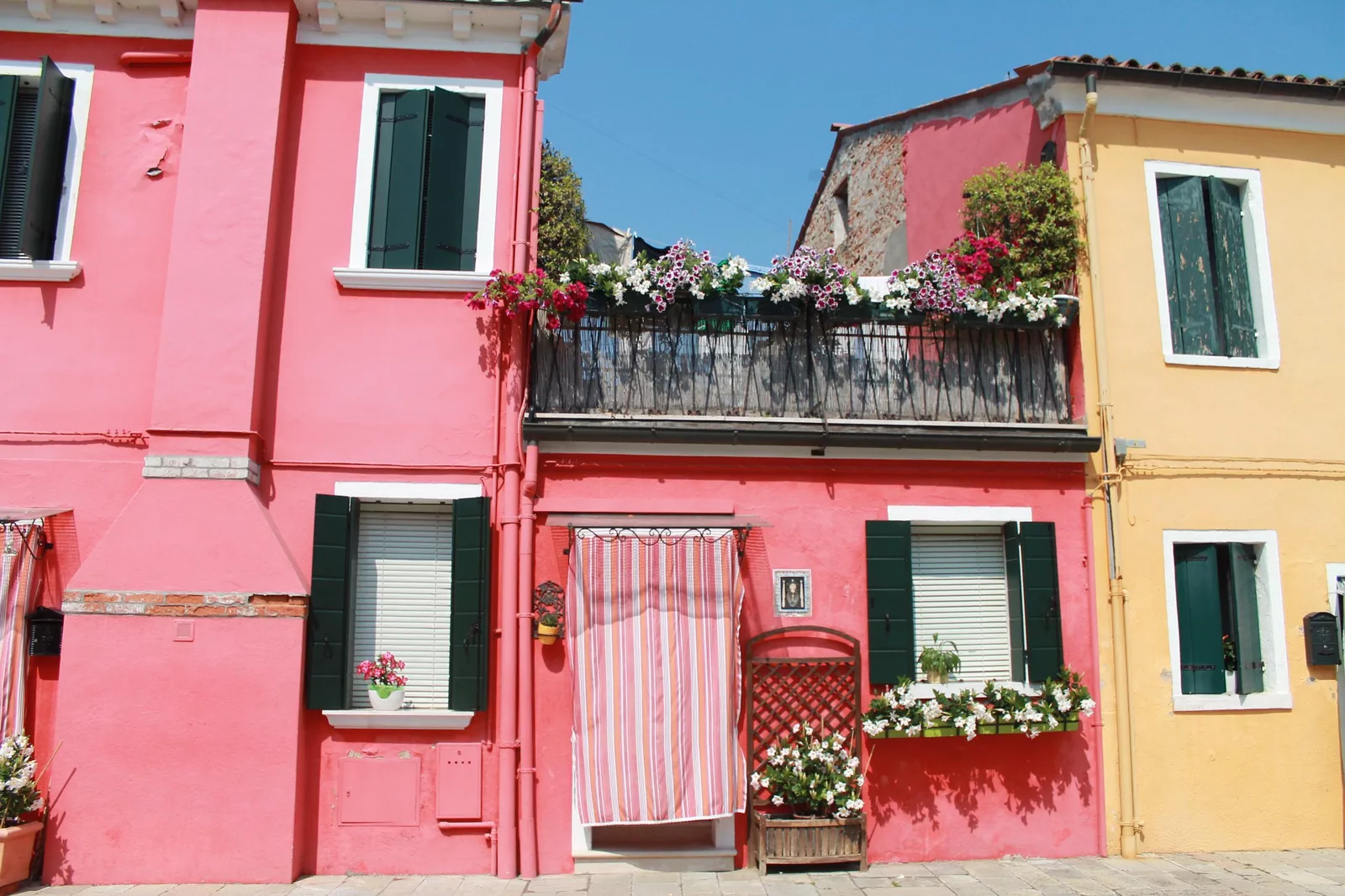
Murano and Burano, on the other hand, while just as famous, feature a completely different environment. Residing on these two islands may be less convenient without access to a boat, but real estate is significantly more affordable and life is considerably less chaotic. As of May 2026, the average asking price for homes in Murano was €2,700 per sqm (€250 per sqft) and in Burano was €2,500 per sqm (€230 per sqft), making them the most accessible entry points into the Venetian property market.
The Step-by-Step Buying Process
The process of buying property in Venice follows the same legal framework as any other real estate transaction in Italy: it typically involves preparing financially and legally, finding a suitable property, making an offer and signing a preliminary agreement, and completing the purchase with a notarized final deed. Because the procedure includes several important legal, financial, and administrative steps, we recommend reading our detailed guide to Buying Property in Italy: Step by Step, which explains the process from start to finish.
As far as timeline is concerned, most purchases are completed within a few months, although this can vary depending on the property, financing arrangements, and any additional due diligence requirements.
Taxes and Purchase Costs
The main fees that make up total closing costs in Venice are registration tax (2% for a primary residence or 9% for second homes), notary fees (1–2.5%), real estate agent commission (2–4% from each party), and smaller cadastral and mortgage registry taxes.
When you include all additional costs like taxes, notary fees, agency commissions, and potential renovation work, expect to pay 10–18% more than the purchase price.
For most foreign buyers who are not establishing Venice as their primary residence, the single biggest cost is the 9% registration tax on the cadastral value.
There’s also an attractive tax incentive worth mentioning: overseas buyers wishing to transfer their tax residency to Italy pay a flat annual fee on all foreign-sourced income, no matter how much they earn abroad. As of 2026, new residents pay €300,000 per year under this regime, though those who established Italian tax residency before 1 January 2026 are grandfathered in at the previous €200,000 rate.
What to Know Before You Buy
Due to its historic, intrinsic, and artistic value, Venetian real estate is especially coveted among foreign buyers. While this island presents some of the most beautiful real estate in all of Europe, prospective buyers should give serious consideration to what a typical Venetian home or apartment entails. The spaces are often narrow, there are considerable limits to the kind of renovations you are permitted to do, staircases are steep, and elevators are a distant memory. Many comforts and modern conveniences are simply not present in a 500-year-old palazzo.
Fully renovated apartments in Venice typically command higher prices than properties needing updates. Renovation projects can be costly and complex because materials, workers, and skips must arrive by boat.
When purchasing apartments in converted palazzos or historic buildings, pay careful attention to shared ownership elements like roof rights, common areas, and structural maintenance responsibilities, which are defined in the building’s condominium rules.
On the upside, Italy offers meaningful renovation tax breaks. The Bonus Ristrutturazioni offers a 50% tax deduction on renovation expenses up to €96,000 per property unit for interventions on a main home. The Ecobonus offers up to 65% for energy-efficiency upgrades. These apply to foreign buyers who own the property, provided they bear the expenses.
Flooding and the MOSE Barrier — What Buyers Need to Know
The MOSE barrier system, completed in 2020, activates for predicted flooding above 110cm and has successfully prevented several acqua alta events since then. However, the system doesn’t activate for minor flooding, and its long-term effectiveness against rising sea levels remains uncertain.
In the early 1900s, St. Mark’s Square flooded roughly seven times a year; by the 1990s, it was close to 100 times. By the 2020s, without MOSE, it would flood approximately 250 times a year.
For buyers, the practical implication is floor level. Ground-floor properties (piano terra) are most exposed to minor flooding events that MOSE doesn’t cover. Properties on upper floors or in elevated sestieri like Dorsoduro and Cannaregio carry less risk. This should factor into both your purchase decision and your insurance costs.
Mortgages for Foreign Buyers
Non-resident foreigners typically qualify for mortgages with a 50–60% loan-to-value ratio in Venice, requiring a 40–50% deposit.
Many Italian banks offer mortgages to foreigners, but the terms and conditions differ from those for residents. As of 2025, rates start at around 3.50–3.80% for non-residents depending on the lender and whether the loan is fixed or variable. Using a bilingual mortgage broker familiar with cross-border financing is strongly recommended.
Final Thoughts
In conclusion, the city of Venice features some of the most desirable and expensive real estate in the world. As real estate goes, however, these properties are extremely peculiar. Many who approach buying a house in Venice find the process more akin to buying fine art than to buying prime real estate.
FAQ About Buying Property in Venice
Is buying property in Venice a good investment?
Venice is one of the most supply-constrained real estate markets in the world. The protected heritage status of the historic city makes it nearly impossible to build new properties, meaning inventory is permanently limited while international demand continues to grow. The combination of scarcity, global appeal, and a favorable Italian tax regime for foreign residents makes it a compelling long-term hold. That said, it is a niche, illiquid market; buying in Venice is closer to acquiring fine art than a typical real estate investment, and should be approached accordingly.
Can Americans (or other non-EU citizens) buy property in Venice?
Yes. Italy operates on a reciprocity principle, meaning citizens of countries that allow Italians to purchase property are free to buy in Italy under the same terms as Italian nationals. This applies to citizens of the US, UK, and Australia, among many others. EU citizens have identical rights to Italian nationals. All foreign buyers, regardless of origin, must obtain an Italian tax identification number — the codice fiscale — before completing a purchase.
How much does an apartment in Venice cost?
It depends significantly on location. The gap between San Marco at around €6,200 per sqm and the outer islands at around €2,700 per sqm means you can pay more than double for the same surface area depending on location. On the islands of Murano and Burano, prices are considerably more affordable. Budget for purchase costs of an additional 10–18% on top of the property price, covering taxes, notary fees, and agent commissions.
Is Venice sinking? Should flooding affect my purchase decision?
Venice does face a real and ongoing flood risk, but the situation has improved materially since the MOSE barrier system became operational in 2020. MOSE activates for predicted flooding above 110cm and has successfully prevented several acqua alta events since 2020. For buyers, floor level matters: ground-floor properties are most exposed to minor flooding events that MOSE doesn’t cover. Properties on upper floors, or in elevated sestieri like Dorsoduro and Cannaregio, carry meaningfully less risk. Factor flood insurance into your ongoing ownership costs.
Can I renovate a property in Venice?
Yes, but with significant constraints. Most properties in the historic center fall under heritage protection, which means structural changes, facade alterations, and even some interior modifications require special permits and must use approved materials and methods. The protected heritage status of the historic fabric makes it extremely difficult to obtain permits for anything beyond careful renovation of existing structures.
How long does the buying process take?
From initial offer to final deed, buyers should expect the process to take 3–6 months. The key steps are: signing the preliminary contract (compromesso) with a 10–20% deposit, a due diligence and searches period conducted by the notary, arranging financing if needed, and finally signing the final deed (rogito) in front of the notary. Having a bilingual lawyer and a notary experienced with foreign buyers will smooth the process considerably.
If you are curious about Venice’s short term rental market, you may find interesting information in our article on the best short-term rental markets in Italy.