Italian real estate has long been the coveted prize of many international buyers in search for the perfect vacation home. While purchasing property in a foreign country can be a complicated process, the good news is that acquiring your very own piece of the Bel Paese is significantly more affordable than it used to be. There are two primary reasons for this.
1. US Dollar to Euro Exchange Rate
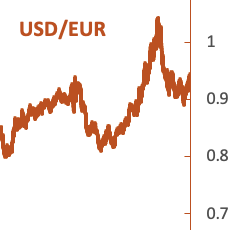
Over the past decade, the exchange rate between the U.S. dollar and the euro has fluctuated in response to economic conditions, interest rates, and global financial trends. While there have been periods when the dollar was particularly strong against the euro, the rate continues to move up and down over time.
Historical USD–EUR exchange rate data is published regularly by the European Central Bank.
Today, the dollar generally buys fewer euros than it did during the peak strength seen in 2022, but it remains within a range that many American buyers still consider favorable compared to earlier periods.
Because property in Italy is priced in euros, shifts in the exchange rate can influence how much house American buyers can afford with their dollars. When the dollar strengthens, buyers effectively gain more purchasing power, allowing them to get more property for the same amount of money.
Exchange rates are only one factor to consider when purchasing real estate abroad. Understanding the full buying process is equally important, especially for international buyers. You can learn more about how Americans can buy property in Italy in our detailed guide.
The chart below illustrates how different exchange rates can influence the cost of a €300,000 home.
Fig 1: How Exchange Rates Affect the Cost of a €300,000 Home
| Exchange Rate | Cost of €300,000 Home in USD | What It Means for Buyers |
|---|---|---|
| €0.75 per $1 | ~$400,000 | Dollar is weak, property costs more for Americans |
| €0.85 per $1 | ~$353,000 | Moderate purchasing power |
| €0.92 per $1 | ~$326,000 | Strong dollar, Americans get more for their money |
2. Mortgage Rates and Buyer Competition
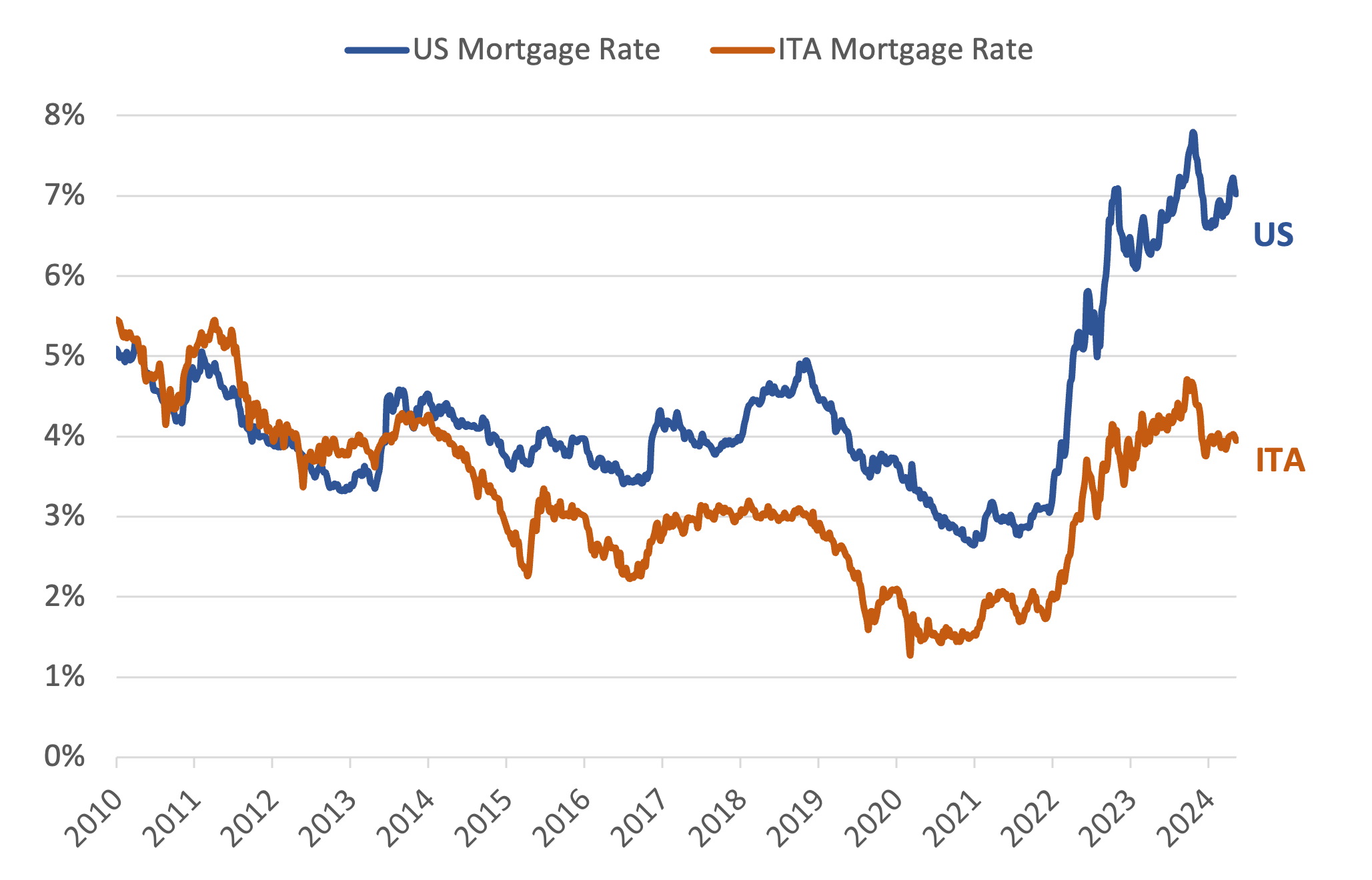
Like in much of the Western world, rising mortgage rates over the past few years have slowed activity in many real estate markets. Higher borrowing costs tend to reduce the number of buyers who rely on financing, which can ease competition in certain segments of the market.
While mortgage rates in Italy are often lower than those in the United States, the Italian market had become accustomed to very low interest rates during the previous decade.
As financing costs increased, some Italian and European buyers stepped back from the market for second homes. For international buyers who are purchasing with cash—or who have strong credit and access to financing—this environment can sometimes present opportunities to find desirable properties with less competition.
Mortgage rates in both the United States and Italy have fluctuated in recent years, as illustrated in the chart below. Changes in financing costs can influence buyer activity and overall competition in the property market.
Fig. 2: Average 30Y Mortgage Rate in US and Italy
To quote the old adage, there is no better time than the present when it comes to purchasing real estate in Italy at competitive prices. If you are curious to learn more about the process of purchasing a house in Italy, please explore our library of content or reach out to us at [email protected].